0
min read
Agentic AI: Nine structural shifts for the fintech investing landscape

04 September 2026

Share
An increasing proportion of VC money (61% in 2025 vs 30% in 2023) is going to AI startups at a large and growing premium over non-AI startups. At the same time, value propositions are changing from AI as a productivity tool to AI as an orchestration platform. In this blog, based on a presentation we gave to the Executive Management Program at the Frankfurt School of Finance and Management, we assess where the biggest opportunities lie, what happens to defensibility, and how the role of VC itself may be affected.
1. Software development costs are falling — and with them, software as a moat
The productivity improvements from using AI coding tools are impressive. According to data from the National Bureau of Economic Research in the US, gains in line-by-line coding productivity are as much as 1,630%.
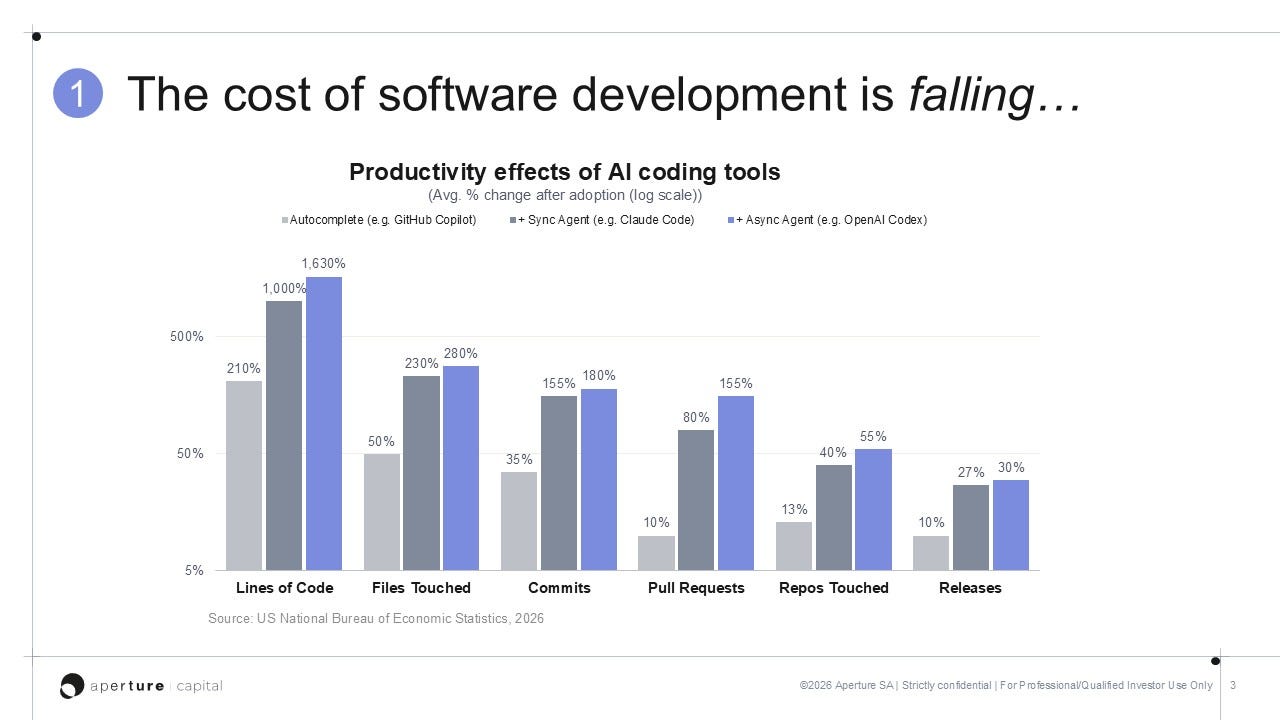
Admittedly, these productivity improvements slow materially as code moves from creation into production, but we already see new technology to address the full software development lifecycle, and we expect the gap to narrow*.
In short, AI is already lowering the cost and speeding up the process of developing software and these improvements are likely to continue.
It follows that the competitive advantage a company derives from developing software will also fall and, all else being equal, its ability to earn sustained high returns on capital will become more challenged.
However, falling software costs are not a new phenomenon. History is built on the shoulders of giants, and GenAI is the latest in a series of technology advances that have lowered the costs of software development. Arguably, generative AI represents the next frontier in software development abstraction as coding has evolved from assembly language, to high-level compiled languages, to natural-language prompts. Moreover, outside direct software development costs, other technology changes, such as cloud computing services, have also lowered the costs and reduced the barriers to entry for anyone wanting to start a software business.
As such, we would argue the most successful fintech companies have rarely built their moat on software alone and, in future, this will be increasingly true. If multi-layered defensibility wasn’t necessary before, it will become essential going forward. In practice, this means combining software with something else — hardware, regulatory licenses, proprietary data, network effects, embedded services — or, ideally, several of these layers at once.
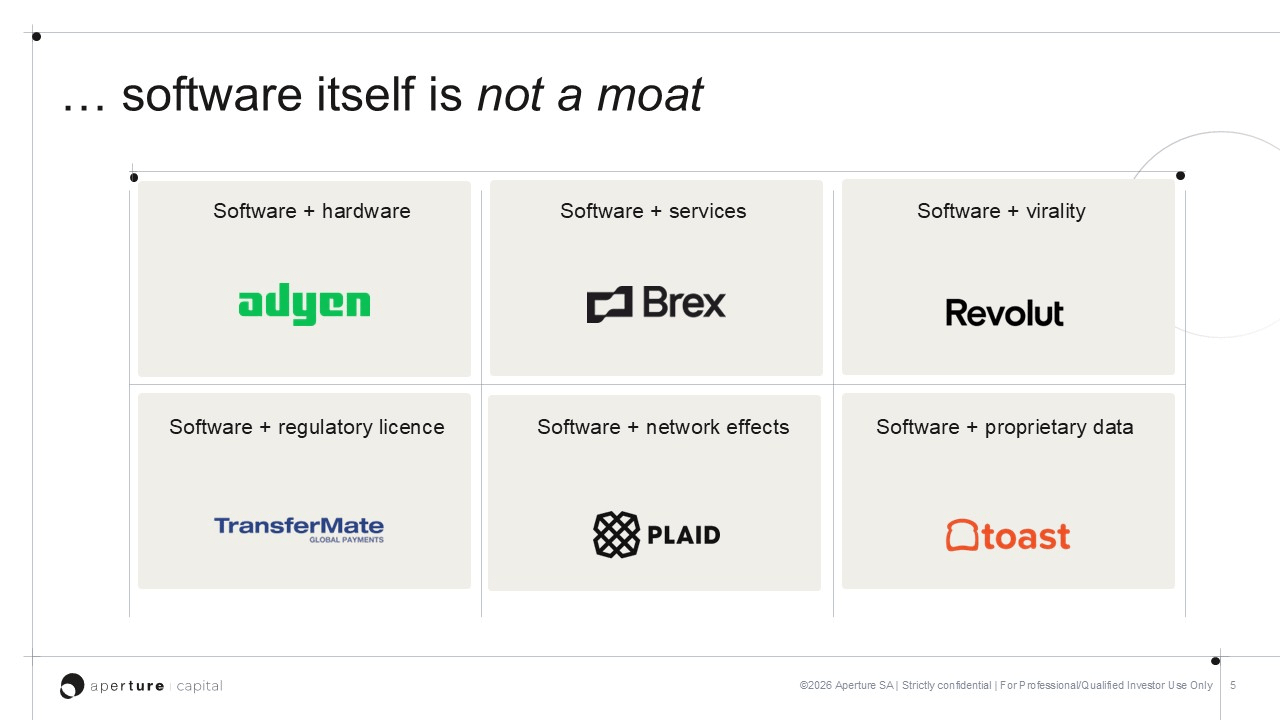
In the end, as investors, we now need to ask ourselves whether we would still invest in a business if you could charge nothing for its software — that is, whether there is sufficient defensibility or value-add beyond the software itself to sustain high returns on capital.
2. New entrants are multiplying — and scarcity continues to move to distribution
Clayton Christensen’s Law of Conservation of Attractive Profits describes the “reciprocal processes of commoditization and de-commoditization”. Essentially, when part of a value chain commoditizes, then scarcity moves elsewhere. In this case, if GenAI allows anyone with a good idea for a fintech product to build it, the bottleneck will increasingly move to distribution – finding users (at an acceptable price).
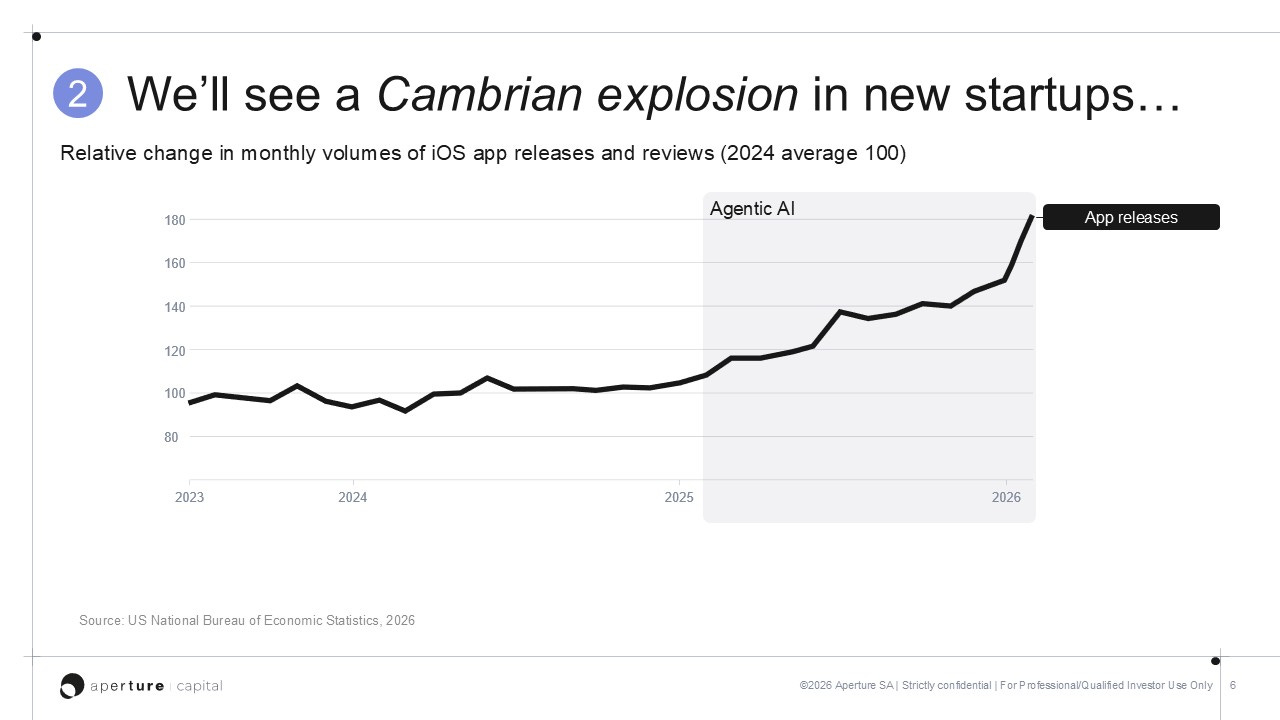
As a proxy to illustrate the point, we use data for app store releases (taken from the same NBER paper). Since the advent of GenAI, there has been a marked and sustained increase in the number of new apps being released onto the iOS store: i.e., as anticipated by the laws of economics, cheaper software development is leading to more software being released.
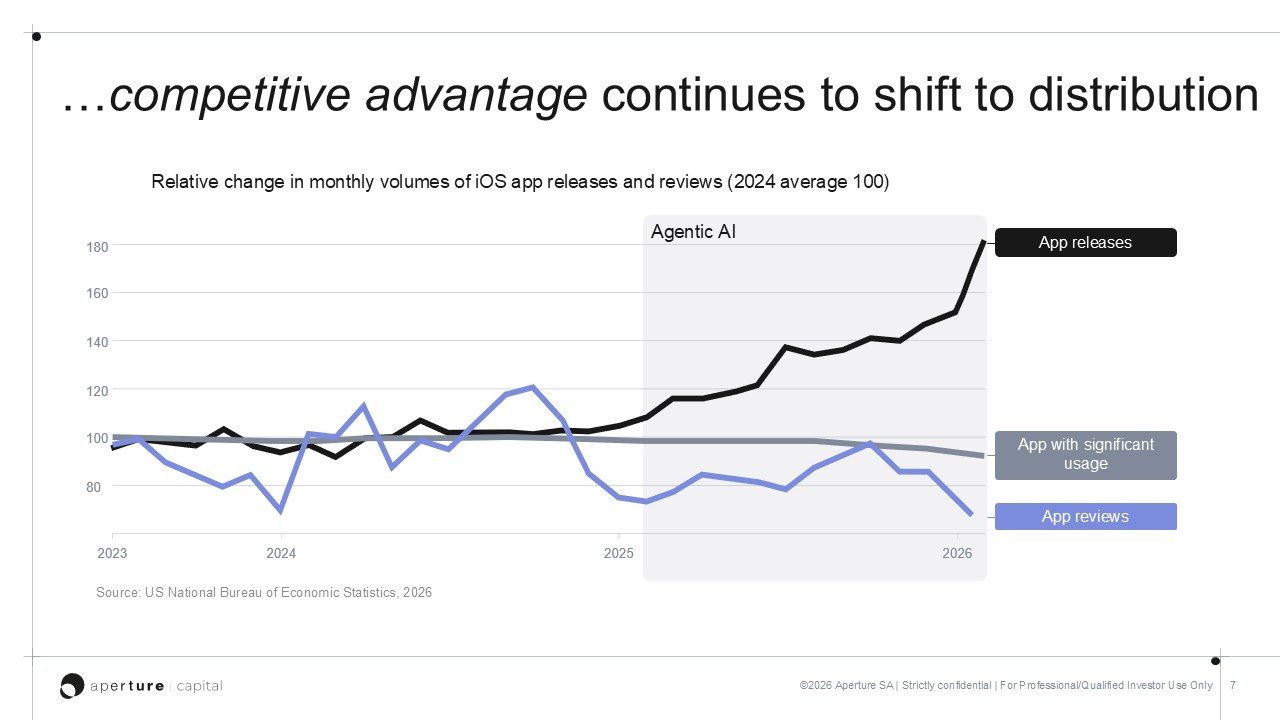
However, as the data shows, the number of apps with a significant number of users is actually falling marginally. In other words, an abundance of products does not necessarily translate into an abundance of success because we hit a demand constraint. As Nobel prize-winner Hebert Simon put it, a wealth of digital information creates a poverty of attention.
Therefore, the most successful fintech companies will be those that not only make the best products but also have the best Go-to-Market (GTM). The yardstick will not just be reaching time-poor, attention-poor, risk-averse buyers at an affordable price, but also persuading them to use the solution and to increase their usage over time, or to use the parlance, achieving a compelling CAC (Cost of Acquiring Customers) to LTV (LifeTime Value) ratio.
GTM is a function of GTM strategy and execution, but it is also inherent to a product. When we analyze companies, we should ask ourselves not only whether this is a great team looking to address an underserved market, but whether there something in the value proposition that could trigger a compounding distribution advantage, such as virality that turns consumers into a customer acquisition channel, or network effects that make the solution more valuable to every user. With those kind of in-built distribution advantages, the GTM strategy can be focused on unlocking them faster, using pricing or community or bottom-up selling as the right lever.
3. The competitive advantage is shifting to whoever owns the data and the workflow
We’ve moved from the first phases of GenAI, which were focused on point solutions and co-pilots, to autonomous agents.
But this agentic AI shift for enterprise customers is more complicated and will involve a longer deployment period than people realize. The challenge isn’t just the organizational change management and IT security implications of adapting processes, ways of working, and opening up information to probabilistic agents — there’s also the difficulty of providing agents with the right level of organizational context to work consistently and effectively at scale.
To do the latter requires consolidating multiple datasets and orchestrating multiple processes. This, in turn, requires fintech companies to put themselves in a position where they can control these critical datasets and workflows, either by owning these data sets and workflows or by orchestrating them – or, ideally both.
Essentially, we see two enduringly defensible plays.
The first is to build infrastructure that connects multiple systems of record, giving agents the context they need to coordinate complex processes. The difficulty is the right to win in this space. Unless a fintech can offer valuable proprietary data and context, our hypothesis is that enterprise customers will seek to build this orchestration themselves, to apply the right governance and controls.
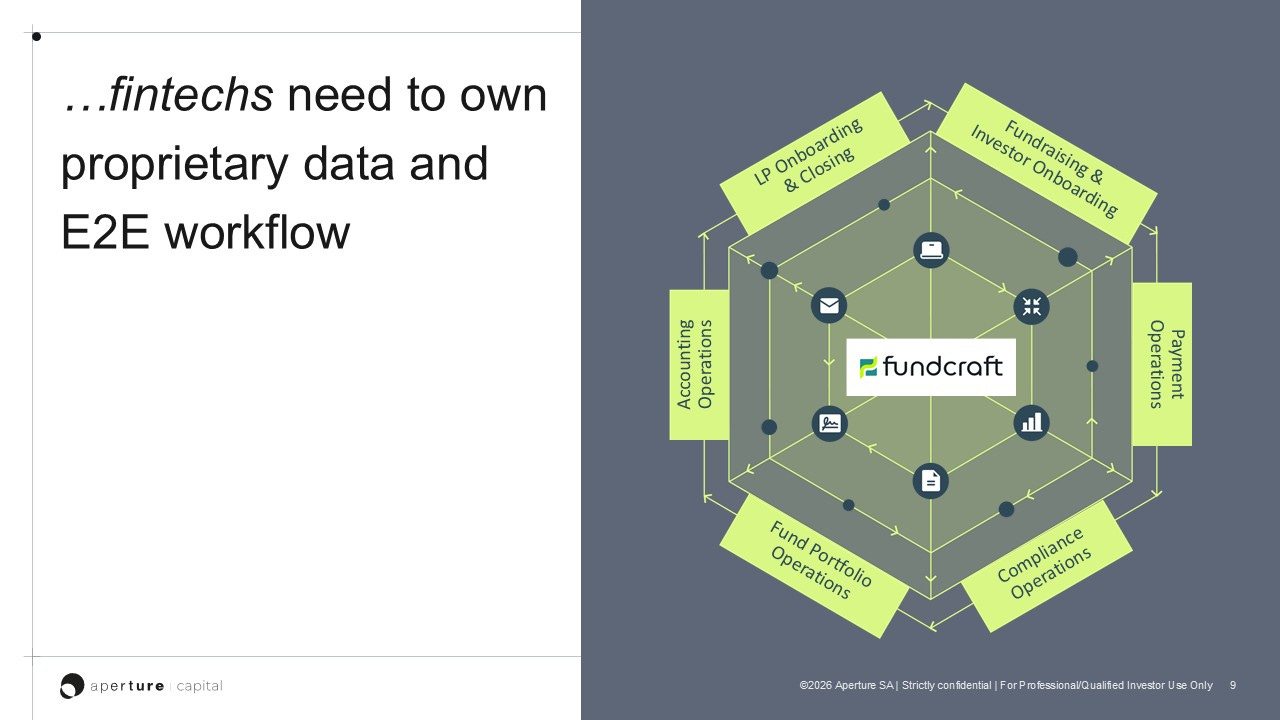
The second is to provide vertical software, i.e. platforms that combine multiple systems of records and multiple workflows to address the end to end needs of their customers – platforms like Toast for restaurants or AppFolio for property managers. These platforms own the workflows, the data and the context. If they can provide well-governed agentic automation on top of their own vertical software then there is little room for AI-native wrappers to displace them and little need for organizations to build them themselves. This is why we remain bullish on the vertical software space and continue to invest in it - in businesses like allo and fundcraft.
The strategic question for investors, then, is not whether a company uses AI, but where it sits in the value chain, and whether it is in a position to orchestrate. Thin workflow ownership, however AI-enabled, will be hard to defend.
4. Cost-cutting with AI is a Red Queen race — market expansion is the real prize
The Red Queen hypothesis — from Lewis Carroll, via evolutionary biology — holds that an organism must keep running just to stay in the same place.
We think that using agentic technology to cut costs is a Red Queen strategy. Your competitors have access to the same tools, the same models, the same workflows and so cost savings get competed away and improvements in either competitiveness (by lowering prices) or profitability (by increasing margins) prove fleeting.
The more durable opportunity, and the one that creates lasting shareholder value, is using agentic AI to expand the total addressable market for financial services — attacking areas with stubbornly high costs to serve, but elastic demand. Markets like wealth management for the mass affluent, SME finance and infrastructure lending, where price cuts could unlock a much larger TAM.
These are markets where the unit economics of serving customers have historically been unforgiving and where AI-driven automation of compliance flows, personalized communication at scale, and real-time underwriting can genuinely open up new markets rather than just deliver efficiency gains in existing ones.
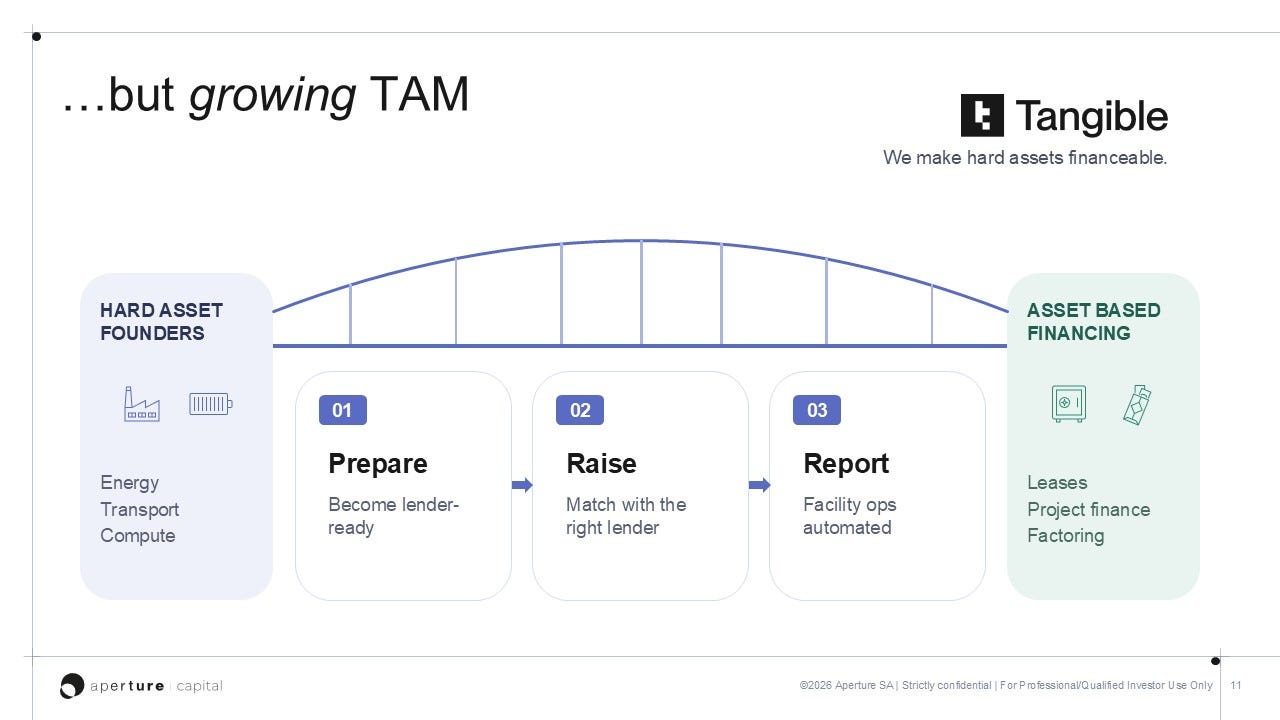
Tangible, in which we recently invested, illustrates this. Tangible is building a new financial intermediary between hard-asset companies — robotics manufacturers, data centre builders, drone operators — and the private credit funds seeking to finance them. Most hard-asset founders are engineers and scientists, not capital markets specialists. Tangible uses agentic AI to walk them through asset-based lending qualification at scale — essentially creating a natural-language interface into structured finance. On the lender side, it provides real-time asset utilization data to support underwriting of businesses that are genuinely novel.
The scale of what this unlocks is not trivial. Larry Fink recently estimated that global infrastructure investment demand will reach $68 trillion by 2040. The constraint is not technology; it is capital intermediation.
This is the kind of structural gap — not a cost-saving opportunity — that we think investors should be looking to fund.
5. Compliance must be designed in from first principles — not retrofitted
Fintech is two words: finance and technology. Too often, founders overestimate the impact of the technology part and underestimate the implications of the finance part. The standard playbook has been to build fast, hit regulatory friction at scale, receive a manageable reprimand, and retrofit compliance. In 2024, global regulatory fines reached a record $19.3 billion. That playbook is no longer viable.
There are two reasons it will get worse, not better. First, the volume of new entrants means regulators are dealing with far more companies and have less tolerance for build-now-comply-later approaches. Second, and more importantly, the same agentic AI capabilities that can automate commercial processes can automate compliance processes. There is no longer a meaningful trade-off between moving quickly and building compliantly.
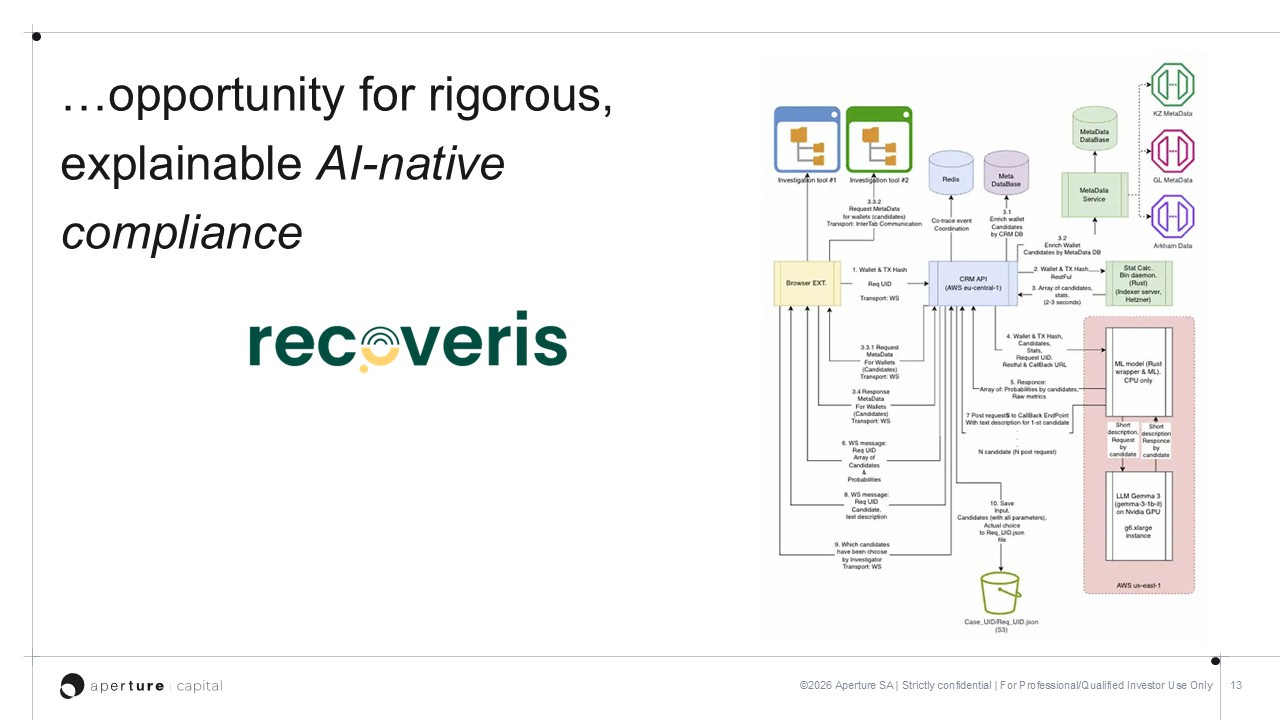
Recoveris is a good illustration of where this is heading. They provide digital asset investigation and recovery services — a market that is growing in direct proportion to the tokenization of assets and the expansion of the on-chain attack surface. Their architecture is a combination of deterministic and probabilistic models, explicitly designed for every decision to be traceable in the investigation and recovery process for a regulator or court. In compliance, explainability is not optional, and the companies building AI-native compliance infrastructure with that constraint as a first principle will be the ones that scale.
6. The infrastructure for agentic commerce is still being built
LLMs are increasingly present in the online purchase journey. The share of purchases directly influenced by AI is still small in absolute terms — AI platforms drove c.1% of overall web traffic across major retail industries in late 2025 — but is growing extremely fast, at around 400% annualized.
It seems logical to us that at some point LLMs will move toward autonomous execution. Today, an LLM recommends a product but still requires a human to find it, add it to cart, and check out. As soon as agents can transact on our behalf, that friction largely disappears, and the economic incentive (lower cart abandonment, faster conversion) pushes merchants toward enabling it.
However, for agentic commerce to work at scale, the financial services industry still needs to settle who an agent is acting for (identity), who pays when something goes wrong (liability and fraud), what an agent is allowed to do without human sign-off (consent and spending limits), how agents and merchants communicate (interoperable standards), and who owns fulfilment, delivery, and returns once an order spans multiple sellers or platforms.
Most current work on protocols (ACP, UCP, MCP) addresses discovery and checkout. Almost none of it addresses what happens after the order is placed, which is precisely where liability, fraud, and fulfilment failures surface.
We believe this gap calls for a trust layer that sits between buyer and seller and owns the transaction end-to-end, not just the moment of payment.
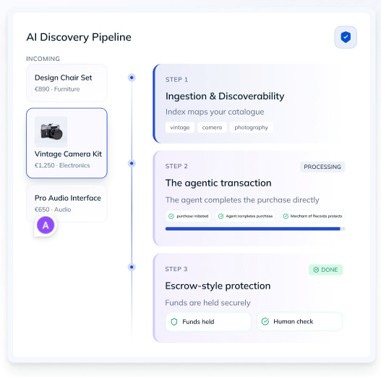
This is why we invested in Trustap. The company provides trust infrastructure for agentic payments — escrow, pay-in, pay-out, fulfilment — while separately aggregating supply from fragmented classified marketplaces into a machine-readable, LLM-accessible format. These are two distinct capabilities rather than one bundled product: the trust layer secures the transaction, and the aggregation layer builds the merchant density needed to make that trust layer worth adopting in the first place. We think this is a winning combination, which creates the path for Trustap to become critical infrastructure for agentic commerce.
But this is still early. Online payments gave rise to Stripe, Adyen, and Checkout.com among others, each solving a different piece of the same underlying problem. Similarly, agentic commerce will give rise to a new generation of fintechs filling in the missing plumbing.
7. AI unit economics are not SaaS unit economics — and most companies are flying blind
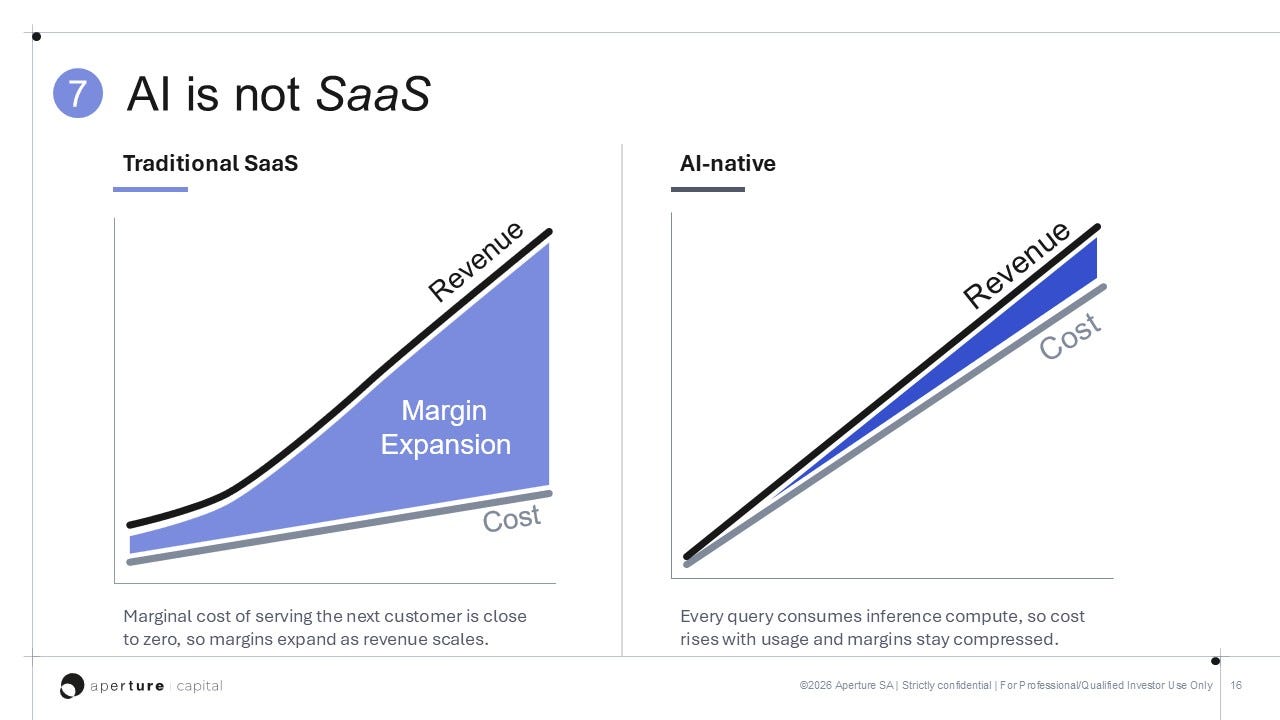
The SaaS model suited venture capital well because its economic structure rewarded scale. Costs — people, cloud infrastructure, marketing — are mostly fixed or semi-fixed in the short term, and gross margins benefit from the near-zero marginal cost of serving one more user. As revenue grows, SaaS companies enjoy operating leverage and margin expansion. This is a predictable model, with a clear playbook (invest heavily in S&M to trigger operational scale) — and it was easily underwriteable.
AI-native companies have different unit economics, with a much higher proportion of marginal costs. It’s not a model shift per se, more of a shift in weighting, but one with material importance. Compute is a much larger share of the cost stack for AI-native companies, and compute scales linearly with usage. This precludes the same degree of operating leverage as in a SaaS model, and risks, with per-seat pricing, making your most active customers your least profitable ones.
This creates challenges for the engineering and the commercial teams.
For the engineering team, the task is to reduce compute as a share of costs as the business scales, through caching, model routing, distillation, and fine-tuning smaller models for narrow tasks.
For the finance team, the task is to know, in as near real-time as possible and in as granular detail as possible, all your input costs and all your revenues, to understand marginal profitability on every product and every customer, and to be able to adapt these dynamically with usage-based and outcome-based pricing.
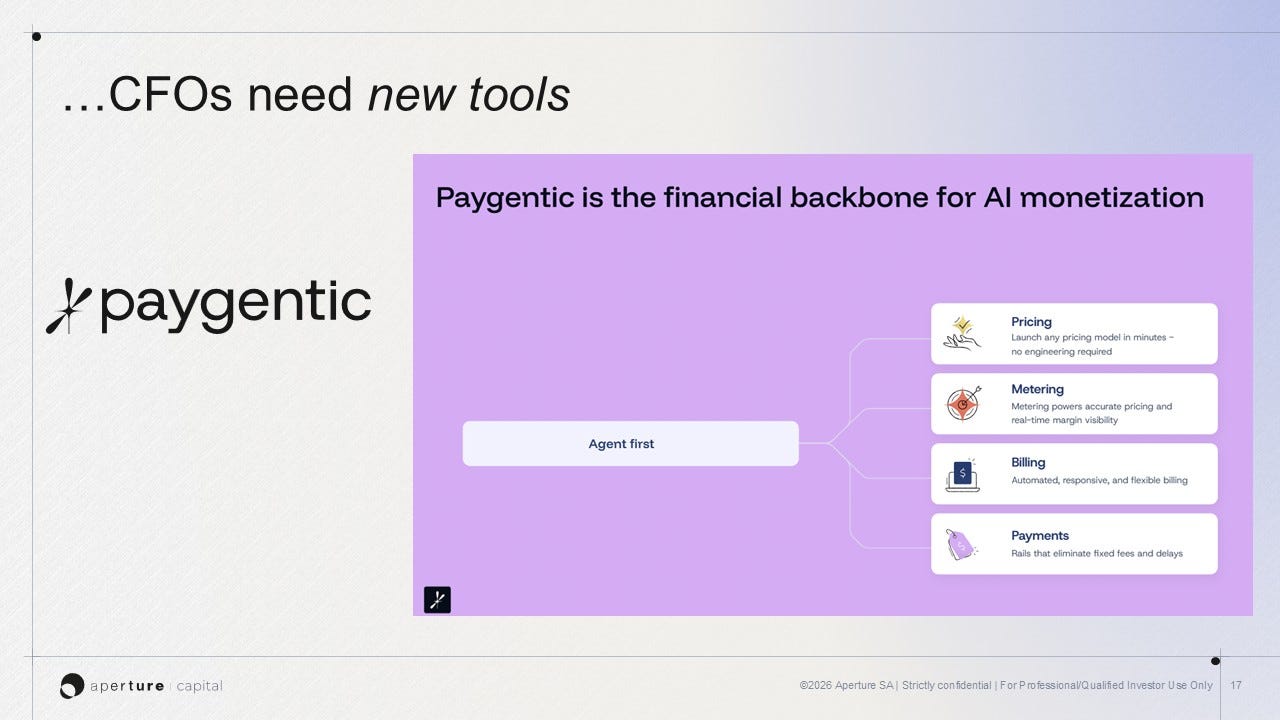
We see large opportunities in both areas and are already placing bets, such as Paygentic, an AI-native payments and billing platform.
8. Agentic AI gives embedded finance a second wind
We have held the view since founding Aperture that the manufacturing of financial services and the distribution of financial services will increasingly be separated, because they have fundamentally different characteristics and are therefore likely to be dominated by different types of players. Manufacturing is about scale economies, compliance discipline, and capital management — still the domain of large incumbents. Distribution is about engagement, contextual relevance, and data.
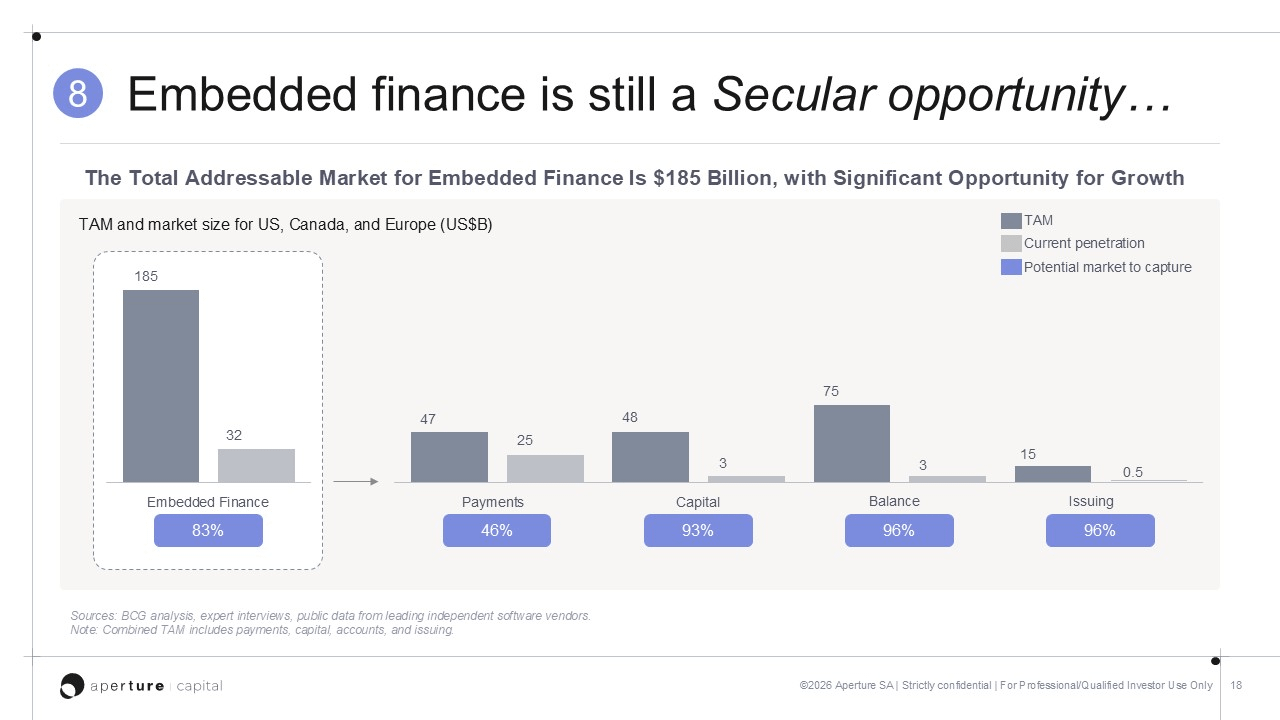
Agentic AI strengthens this thesis in two specific ways. First, the tighter unit economics of AI-native businesses create a stronger incentive to pursue secondary revenue streams — and embedded financial services are among the most attractive. Second, as software pricing trends toward zero, the embedded finance layer becomes one of the most important monetization paths available.
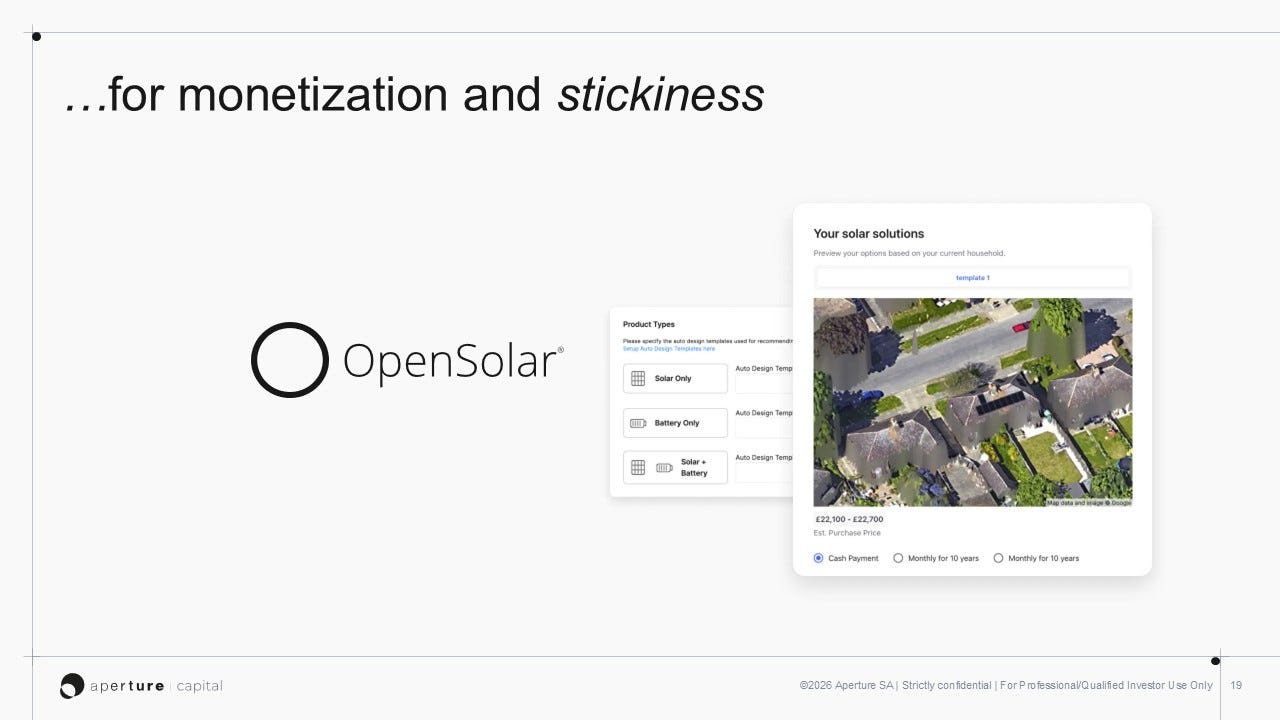
OpenSolar represents an interesting template. By making their software free to solar contractors, they achieved rapid market share — reaching 50% penetration in the UK within 18 months of launch. As they layer in financing, payments, and insurance, the take rate begins to track GMV. The model — free software as distribution engine, embedded finance as the monetization layer — is one we expect to be adopted by a growing number of application businesses.
9. AI companies can scale with less capital — which changes what VCs need to offer
The final shift is one that affects the VC model itself. As agentic AI reduces the cost of building software and scaling teams, many startups will need materially less venture capital than their predecessors. Some of the best fintech companies being built today will not have a Series C or a Series D. The venture model — which has become oriented toward finding companies in late stages after product-market fit is clear — may need to move earlier.
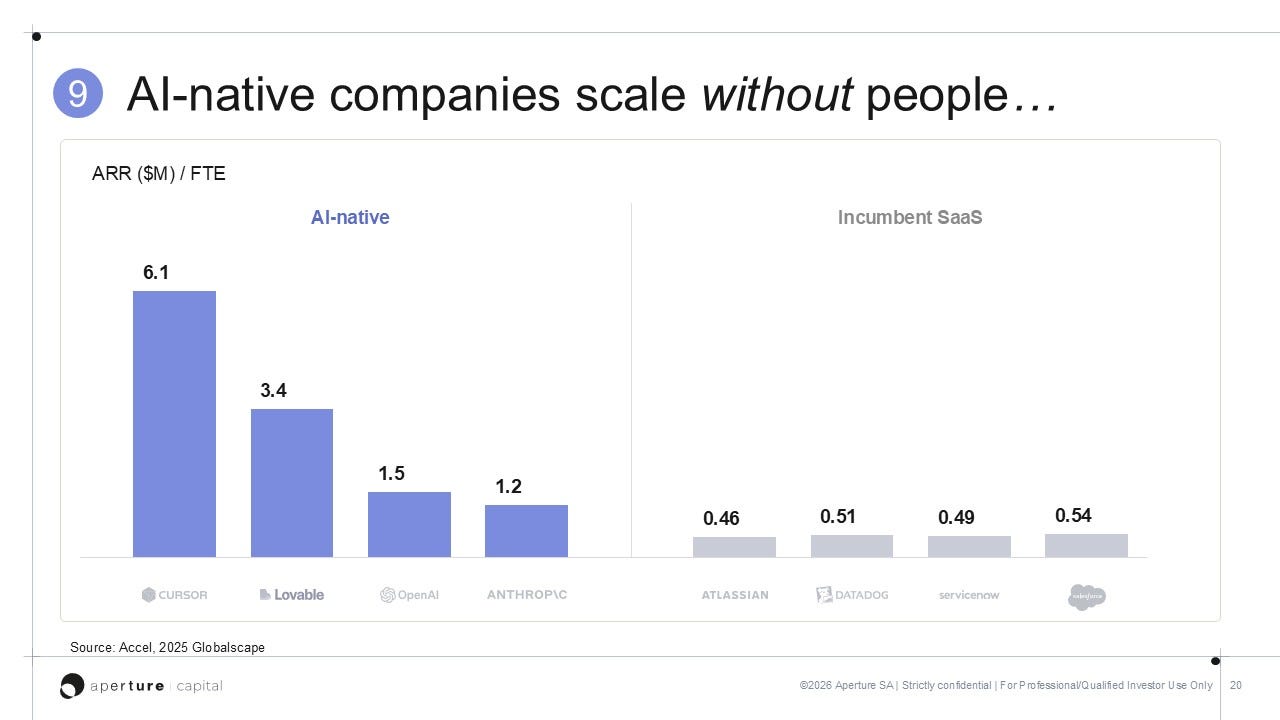
But the more fundamental implication is about what VCs need to offer. In a world where great companies can be built more cheaply and reach revenue earlier, the best founders will be more selective about who they raise from. Capital alone will not be a sufficient differentiator.
At Aperture, our answer to this has been to build a go-to-market platform for our portfolio companies. Our view is that distribution is the choke point in the value chain and will continue to become more pronounced as AI reduces barriers to entry. By providing hands-on GTM support, we help our portfolio companies to reach more customers, more quickly and more cost-effectively, accelerating and de-risking their growth.
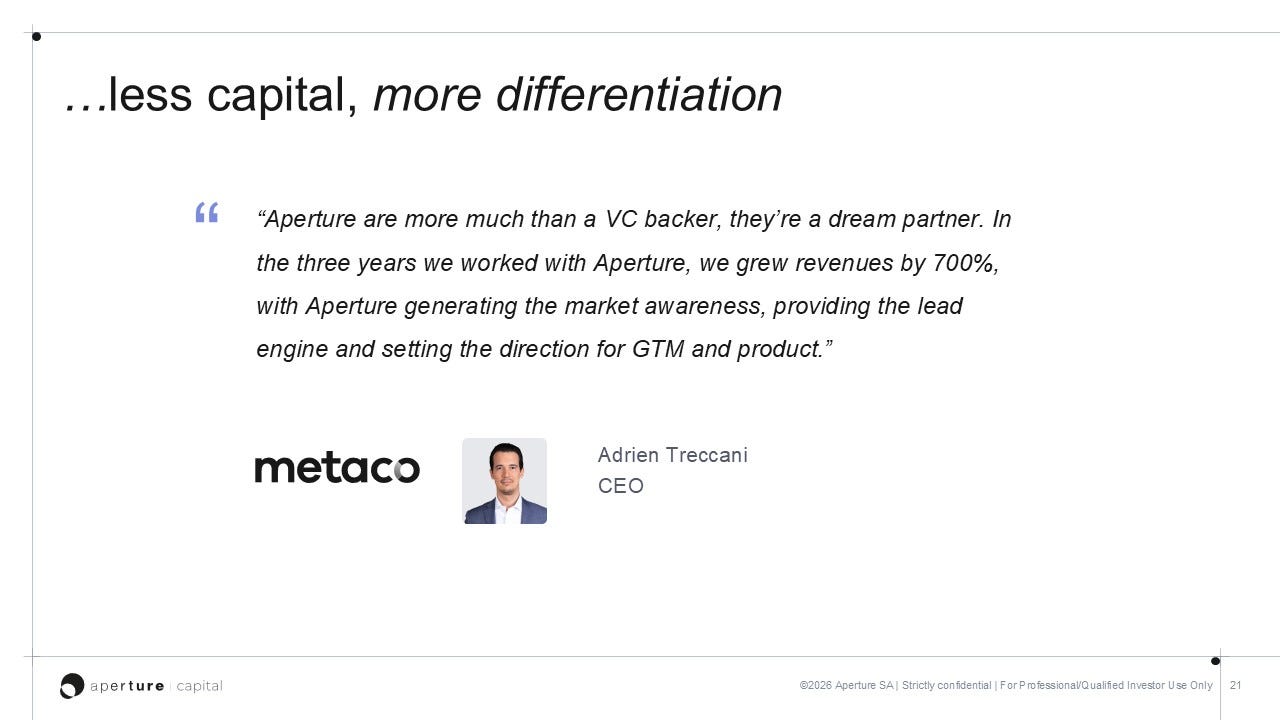
Creating this kind of portfolio success and “operational intimacy” bestows other advantages, in sourcing, due diligence and proprietary.
We were recently told that we are mullet capitalists – GTM at the front, venture at the back – and we expect others to adopt similar models as the competition for the best deals intensifies.
Subscribe to our newsletter
Join our newsletter to stay up to date on features and releases.